Tuesday, January 31, 2012

at midnight i'll take your soul (1964)


jose mojica marins's 'at midnight i'll take your soul' is an intense work of art. there is a trace that lingered inside after the initial viewing, which made me wonder what precisely about this low-budget, nearly amateur, third-world film was so engaging as to stay behind in thought. there is a violence one that covers the atmosphere from beginning to end, and binds all the events on the stage. the character of coffin joe, along with the performative-presence of marins, conducts much of the intrigue of the film. despite, or because of, jose marins's decision to ultimately play the lead (from his inability to keep an actor interested in committing to the role) there is a high-energy, bleeding-heart-on-the-table quality to the character which would have been - considering the circumstances of budget, production, and genre - either distant or stilted. his characterization breaks threshold and wields iconography :: the top hat and cape at first strikes as silly dress up, until marins introduces the notion of the separated social classes into the narrative ... it was then when i began to see this character, named Zé do Caixão in the original Portuguese, as part of an alienated oligarchy belonging to this industrialized poverty state depicted // the result resembling a highly original, and deeply willed, edgar poe-like narrative. that Zé makes his fortune in the business of dead bodies wraps the intent into itself reflecting to the Day of the Dead.

Monday, January 30, 2012

how tasty was my little frenchman (1971)

River, that stealest with such silent pace
Around the City of the Dead, where lies
A friend who bore thy name, and whom these eyes
Shall see no more in his accustomed place,
Linger and fold him in thy soft embrace
And say good night, for now the western skies
Are red with sunset, and gray mists arise
Like damps that gather on a dead man's face.
Good night! good night! as we so oft have said
Beneath this roof at midnight in the days
That are no more, and shall no more return.
Thou hast but taken thy lamp and gone to bed;
I stay a little longer, as one stays
To cover up the embers that still burn.


Henry Wadsworth Longfellow, 'Three Friends of Mine: IV'

Saturday, January 28, 2012

la marseillaise (1938)


SEQUENCE :: As the Cinema is capable of extreme shifts of time and space, the possibility has opened (and is almost exclusively utilized) to carry a story across the expanse of any and all material and cognitive potential, compressed into a duration, and confined within a frame. Many scenes will be created; so many, in fact, a form of organization will be required to mediate between the scene and its act.


This is the sequence. It is a unit specific to the rapidly-interchanging fixed aspect of the Cinema, a quality exclusive to the medium. The theatrical play also shares its structuring by act and scene; although, each act normally accounts for no more than 5, 6, 7 scenes, given the limitations of the stage's construction, as well as the immersive requirements of live performance. Thus, the theater has a natural tendency for scenic continuity, or what elsewhere has been described as a slice of life.


Historically, the length of a film's sequence was limited by the celluloid that could fit within a reel. This division, of approximately 8-15 minutes, still maintains itself even in the digital age. A sequence serves to glue a sweeping idea or agenda over a multitude of chronology and setting; it is a macro-action which turns the wheel of the act closer to its realization, but not of such autonomous import as to contain the entirety of the dramatic blue-print within its scope.
A unit is a subdivision of unity.
Unity, per Aristotle, being a quality of wholeness, defined as the containment of a beginning, middle, and end. The prominence of the sequence in the Cinematic structure, and its manner of manifesting out of necessity, speaks to me as a determining, internal proof: our paint is the entire material world, the brush is montage; that which is photographed, the momentary existence grafted out of its historical generation, drives the will of the Cinema. This is the reason why Stanley Kubrick required many takes, or why Jean-Luc Godard ran through the Louvre.
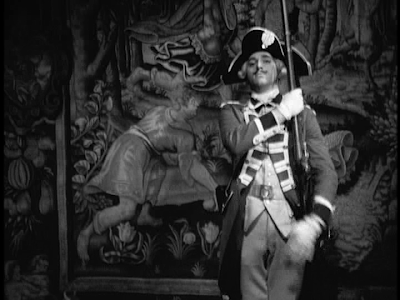


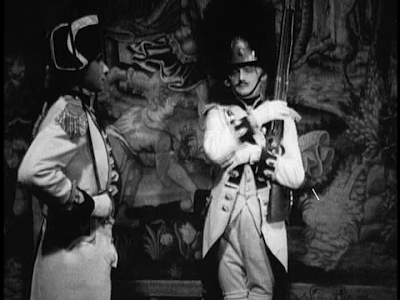
In the revolution Jean Renoir has painted with 'La Marseilles' (1938), “[it] is like an extended theatrical piece, made up of discrete ‘scenes’… as if theater, and along with it, appearance, were integral components of life” – theatricality and artifice being a means for discovering reality, instead of contrasting it. The narrative is on the ground floor of the revolution, our emotional associations attached to characters practicing a function closer to the Shakespearean fool (a passive / analytical agent in a forward moving background), than of the classical-dramatic convention of the individual seeking a consistent want through action. Much like its carrier species, language suffers as well from a great identity crisis: itself of a distinct and static form :: a word appearing just as a word, (for example, “word”) – yet simultaneously a charged metaphor, instantly conjuring the image(s) of something beyond textual representation – language being both of itself (the alphabetical construction of the word “word“) and of another (“word” immediately directing the mind to an idea of a basic element in grammatical syntax).

It is always itself and something else.

Friday, January 27, 2012

ambush in waco (1993)


"It's about pushing vision as far as it will go, to the point that vision breaks down," says Trevor Paglen. "It's about, 'How do you know what you know?" That series was done in [the post-9/11 environment, in which] people were being arrested just for photographing the Brooklyn Bridge. Photography had begun to signify a really political act..."

Thursday, January 26, 2012

battle for haditha (2007)


When the actors are pulled from the same environment as that which is being depicted, there is a sense of memory retrieval in their performance. What is gained is an idea: it's the idea of a heightened authenticity; in appearance, tone, and gesture; – this gain is supported by the participant's approval of what is being depicted, and in their attempt to physically match what previously occurred. A similar technique is used in the films of Paul Greengrass, – much of the Haditha massacre reminded me of his 'Blood Sunday' (2002), released only five years previously. How does this differ from a professionally dramatized production? The form the acting takes is certainly affected: mumbly, conversational, camera-aware, familiar; spontaneous moments occur as if distilled by the deliberate arrangement of wild elements, but once subsided, the narrative continues along with a feeling of separation from non-fictional reality similar to that of the professionally staged. Each individual photographed carries a strong sense of empathy with the scenario they find themselves in: even reprehensible extremes of action become perceived as something at work in a larger field of behaviour, something bred not of the individual's demeanor, but as a manifestation of society, of zeitgeist, as something the spectator could never understand unless standing where the character stood at that exact moment in time. This technique of 'direct cinema' makes visible the invisible subtleties existing within a group (by presenting realities unimaginable unless resulted from true jeopardy) – and if used on both sides of a binary, of the Self and of the Other (the United States marines // the Iraqi insurgents), all of the performers will be blanketed with this curiosity and openness for empathy. It is, then, back in the structural narrative of the film where ideology represents itself.

Wednesday, January 25, 2012

reefer madness (1936)


...but with Amor we have a purely personal ideal. The kind of seizure that comes from the meeting of the eyes, as they say in the troubadour tradition, is a person-to-person experience... [This is] completely contrary to everything the Church stood for. It's a personal, individual experience, and I think it's the essential thing that's great about the West and that makes it different from all other traditions I know... It was important in that it gave the West this accent on the individual, that one should have faith in his experience and not simply mouth terms handed down to him by others. It stresses the validity of the individual's experience of what humanity is, what life is, what values are, against the monolithic system. The monolithic system is a machine system: every machine works like every other machine that's come out of the same shop.

– Joseph Campbell, 'The Power of Myth'